
Expert Historic Masonry Restoration for Landmark Properties
Historic buildings tell the story of our communities. From 19th-century courthouses and downtown commercial blocks to landmark churches and university halls, these structures represent irreplaceable pieces of our architectural heritage. At Bi-State Masonry, we specialize in the restoration of historic masonry buildings, bringing together traditional craftsmanship with proven conservation techniques to preserve these significant properties for future generations. Since 1999, we have completed historic restoration projects on some of the most important buildings throughout Iowa and Illinois.
What distinguishes Bi-State Masonry in the field of historic building restoration is our commitment to following the Secretary of the Interior's Standards for the Treatment of Historic Properties. We understand that working on designated historic buildings requires more than skilled masonry work—it demands knowledge of regulatory processes, documentation requirements, and specialized techniques that differ significantly from standard commercial restoration. Our team works directly with State Historic Preservation Offices in both Iowa and Illinois, and we have extensive experience navigating the approval processes, tax credit documentation, and compliance requirements that historic preservation projects demand.
Whether your project involves a National Register-listed property, a contributing building in a historic district, or a locally designated landmark, Bi-State Masonry has the expertise and resources to deliver restoration work that meets the highest preservation standards while respecting your project timeline and budget.
Regulatory Compliance and Historic Preservation Standards
Historic building restoration operates within a framework of federal, state, and local regulations designed to protect our architectural heritage. Successfully navigating these requirements is essential for project approval, tax credit eligibility, and long-term preservation outcomes. Bi-State Masonry brings deep experience with the regulatory landscape governing historic properties throughout the Midwest.
Secretary of the Interior's Standards
The Secretary of the Interior's Standards for the Treatment of Historic Properties provide the foundation for all historic preservation work in the United States. These standards guide decisions about appropriate treatments, materials, and methods for historic buildings. Our restoration approach is built around these principles, which emphasize retaining original materials, using compatible repair methods, and distinguishing new work from historic fabric when necessary.
The Standards recognize four treatment approaches—Preservation, Rehabilitation, Restoration, and Reconstruction—each appropriate for different project goals and building conditions. We work with property owners and preservation consultants to determine the most suitable treatment approach for each project and ensure our work aligns with the chosen treatment philosophy throughout the restoration process.
Section 106 Review Process
Projects involving federal funding, permits, or licenses must comply with Section 106 of the National Historic Preservation Act. This review process ensures that federal undertakings consider their effects on historic properties. Bi-State Masonry has completed numerous projects subject to Section 106 review and understands the consultation process with State Historic Preservation Offices and the Advisory Council on Historic Preservation.
We support project teams through the Section 106 process by providing detailed documentation of existing conditions, proposed treatments, and material specifications. Our experience with these reviews helps avoid delays and ensures that restoration plans meet regulatory requirements before work begins.
State Historic Preservation Office Coordination
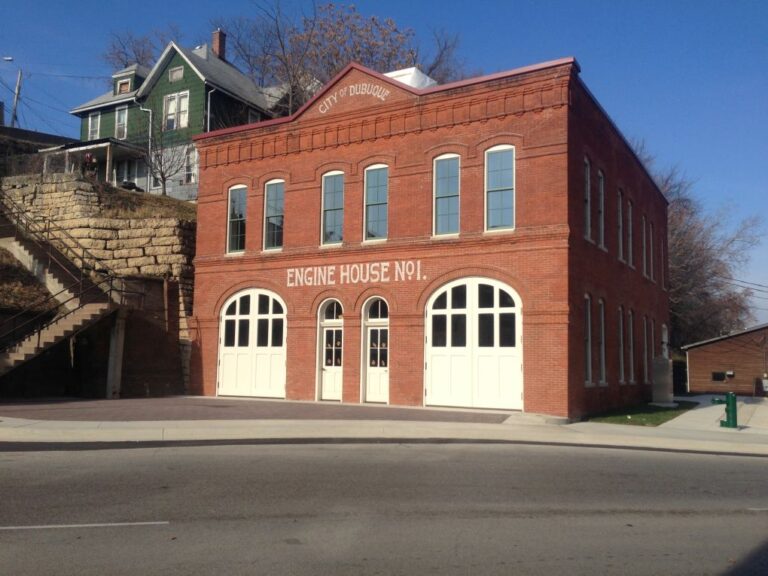 Dubuque Engine House Historic Exterior Masonry Work
Both the Iowa State Historic Preservation Office (SHPO) and Illinois SHPO play central roles in reviewing projects affecting historic properties in our service area. These agencies review tax credit applications, provide technical guidance, and ensure compliance with state and federal preservation standards.
Our team maintains productive working relationships with both state offices. We understand their review processes, documentation expectations, and technical preferences. This familiarity allows us to prepare submissions that address reviewer concerns proactively and move through the approval process efficiently. When questions arise during project reviews, we work directly with SHPO staff to resolve issues and keep projects on track.
Documentation Requirements
Historic restoration projects require comprehensive documentation at every phase. Before work begins, we provide detailed photographic records of existing conditions, material samples, and condition assessments. During construction, we maintain progress photography and document any unexpected discoveries or conditions that may affect the restoration approach. Upon completion, we provide final documentation demonstrating compliance with approved plans and preservation standards.
This documentation serves multiple purposes: it supports tax credit applications, satisfies regulatory review requirements, creates a permanent record for future maintenance planning, and demonstrates due diligence in the preservation process.
Historic Tax Credit Coordination
Historic tax credits provide significant financial incentives for the rehabilitation of historic buildings. These programs can offset a substantial portion of qualified rehabilitation expenses, making preservation projects economically viable that might otherwise be financially challenging. Bi-State Masonry has extensive experience working on tax credit projects and understands the documentation and compliance requirements that successful applications demand.
Federal Historic Tax Credit
The Federal Historic Tax Credit (HTC) provides a 20% tax credit for the certified rehabilitation of certified historic structures. To qualify, buildings must be listed on the National Register of Historic Places individually or as a contributing building in a registered historic district, and the rehabilitation must be certified as meeting the Secretary of the Interior's Standards.
The federal program involves a three-part application process administered by the National Park Service in partnership with State Historic Preservation Offices. Part 1 certifies the building's historic status, Part 2 describes the proposed rehabilitation work, and Part 3 certifies that completed work meets the Standards. We coordinate closely with project teams throughout this process, ensuring our masonry restoration work supports successful certification at each stage.
Iowa Historic Preservation Tax Credit
Iowa offers a state historic tax credit that can be combined with the federal credit for eligible projects. The Iowa program provides credits for qualified rehabilitation expenses on certified historic buildings, with specific allocation processes and application requirements administered by the State Historic Preservation Office.
For Iowa projects, we work with property owners and their tax advisors to understand program requirements and ensure our restoration work qualifies for available credits. Our familiarity with the Iowa SHPO review process helps streamline approvals and avoid issues that could jeopardize credit eligibility.
Illinois Historic Preservation Tax Credit
Illinois provides a state historic tax credit program for qualified rehabilitation projects. The program offers credits for eligible expenses on certified historic structures, subject to application requirements and approval by the Illinois SHPO.
We have completed tax credit projects throughout Illinois and understand the state's review processes and documentation expectations. Our experience helps project teams navigate the application process and demonstrate compliance with program requirements.
Supporting Successful Tax Credit Applications
Masonry restoration often represents a significant portion of rehabilitation expenses on historic building projects. The quality of documentation and the appropriateness of restoration methods directly affect tax credit certification. We support successful applications by providing detailed material specifications that demonstrate compliance with the Secretary's Standards, progress and completion photography documenting restoration work, samples and mock-ups when required by reviewers, and responsive communication when SHPO staff have questions about proposed or completed work.
Our goal is to ensure that masonry restoration work not only preserves the building's historic character but also fully supports the property owner's tax credit objectives.
Working with Preservation Architects and Consultants
Historic building restoration projects typically involve teams of specialized professionals, including preservation architects, historic preservation consultants, structural engineers, and tax credit specialists. Effective collaboration among these professionals is essential for successful outcomes. Bi-State Masonry brings experience working within these project teams and understands the communication and coordination that complex historic projects require.
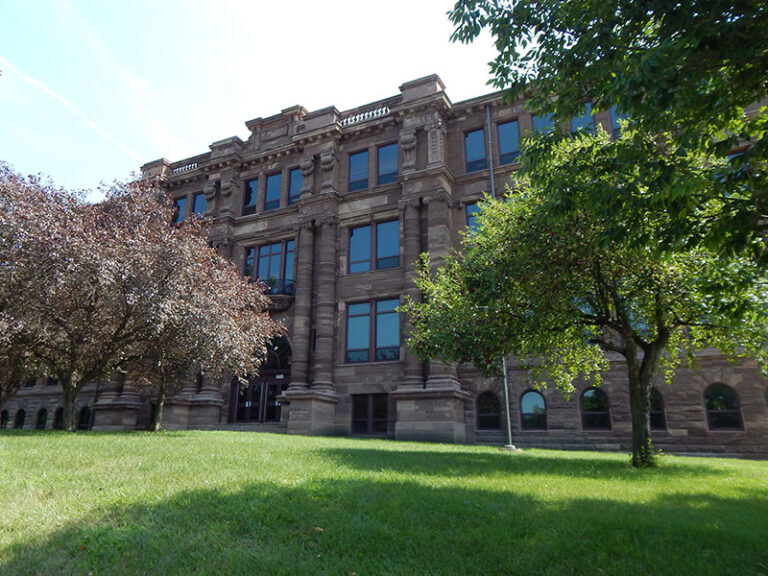
 University of Iowa Chemistry Building Exterior Masonry Restoration
Collaboration with Preservation Architects
Preservation architects bring specialized knowledge of historic building systems, appropriate treatments, and regulatory requirements. We work closely with these professionals throughout the project lifecycle, from initial assessments and specifications through construction and final documentation. Our crews understand how to execute the detailed specifications that preservation architects develop and communicate effectively when field conditions require adaptive solutions.
When projects do not include a preservation architect, we can recommend qualified professionals from our network of contacts developed over more than 26 years of historic restoration work in the region.
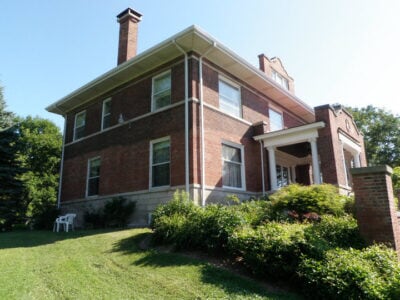 Exterior Masonry Restoration of a Historic Mansion
Material Testing and Mortar Analysis
Matching historic materials is fundamental to appropriate restoration work. For significant projects, we coordinate laboratory analysis of existing mortar to determine original composition, including bite type, aggregate characteristics, and proportions. This analysis guides the formulation of compatible replacement mortars that match the historic material in color, texture, and physical properties.
Using compatible mortar is not merely an aesthetic concern—mortar that is harder or less permeable than the original can cause damage to historic masonry units by trapping moisture and concentrating stress. Our commitment to appropriate mortar matching protects the building's historic fabric while achieving the visual consistency that preservation standards require.
Mock-Up Panels and Approval Processes
Many historic restoration projects require the preparation of sample panels demonstrating proposed treatments before full-scale work begins. These mock-ups allow architects, owners, and regulatory reviewers to evaluate color matching, pointing profiles, cleaning methods, and other visible aspects of the restoration.
We prepare mock-up panels that accurately represent proposed work and remain available for comparison throughout the project. This process ensures alignment on aesthetic expectations before significant work begins and provides a documented standard for quality control during construction.
Communication Throughout Project Phases
Historic buildings frequently reveal unexpected conditions once restoration work begins. Original construction methods, previous repairs, concealed deterioration, and undocumented modifications can all affect restoration approaches. We maintain clear communication with project teams when field conditions require evaluation, providing documentation and recommendations that support informed decision-making without unnecessary project delays.
Historic Building Types We Restore
Our historic restoration experience spans a wide range of building types and architectural styles across Iowa and Illinois. Each building type presents unique challenges and requires specialized approaches. The following represents the primary categories of historic buildings we restore, though our capabilities extend to virtually any masonry structure with historic significance.
Courthouses and Government Buildings
County courthouses and municipal buildings often anchor historic downtown districts and carry significant civic importance. These buildings typically feature prominent masonry facades, decorative stonework, and architectural details that require specialized restoration techniques. We have restored government buildings throughout the region, working within the procurement requirements and public accountability standards that government projects demand.
Historic Hotels and Commercial Buildings
Downtown commercial buildings from the late 19th and early 20th centuries form the fabric of historic business districts across the Midwest. These buildings often undergo adaptive reuse projects that must balance preservation requirements with contemporary building codes and functional needs. Our experience includes restoration of significant historic hotels, office buildings, and retail structures throughout our service area.
Notable projects include the Midland Hotel in Des Moines, the Roshek Building in Dubuque, and the Rock Island Renaissance Building—each presenting unique restoration challenges that our team successfully addressed.
Churches and Religious Institutions
Houses of worship often represent the finest examples of historic masonry craftsmanship in their communities. From limestone cathedral churches to modest brick meeting houses, these buildings carry deep significance for their congregations and communities. We approach religious building restoration with respect for both the architectural heritage and the continuing spiritual mission these structures serve.
Church restoration often involves specialized work on towers, steeples, and decorative elements that require careful access planning and refined craftsmanship. Our experience includes tower restoration at Sacred Heart Church in Davenport and numerous other religious properties throughout the region.
Theaters and Performing Arts Venues
Historic theaters feature elaborate architectural ornamentation, decorative terra cotta, and distinctive facade treatments that require specialized restoration approaches. These buildings often serve as anchors for downtown revitalization efforts and community cultural programming. We understand the particular requirements of theater restoration, including coordination with interior restoration work and sensitivity to the decorative elements that define these buildings' character.
Schools and University Buildings
Educational institutions across Iowa and Illinois occupy historic campus buildings that require ongoing preservation attention. We maintain relationships with major universities in the region, including the University of Iowa, and have completed restoration projects on significant academic buildings such as the University of Iowa Chemistry Building and Kinnick Stadium.
School and university projects often require careful scheduling around academic calendars and coordination with ongoing campus operations. Our experience with institutional clients has developed our capability to work effectively within these constraints.
Industrial and Warehouse Properties
Historic industrial buildings increasingly undergo adaptive reuse as residential, commercial, and mixed-use properties. These substantial masonry structures present unique restoration challenges, including large-scale facade work, structural masonry considerations, and integration with significant building modifications. We have the capacity and experience to handle industrial-scale historic restoration projects throughout the region.
National Register and Locally Designated Properties
Properties listed on the National Register of Historic Places or designated as local landmarks carry specific regulatory requirements and preservation expectations. We understand the compliance obligations associated with designated properties and ensure our restoration work meets the standards these designations require.
Historic Restoration Techniques
Historic masonry restoration requires techniques and materials that differ significantly from standard commercial repair work. The goal is not simply to fix deteriorated elements but to preserve historic character, maintain material compatibility, and ensure long-term performance. Our restoration approach draws on established conservation principles and proven methods developed specifically for historic masonry.
Mortar Analysis and Matching
Appropriate mortar replacement is perhaps the most critical aspect of historic masonry restoration. Historic buildings were constructed with lime-based mortars that are softer and more permeable than modern portland cement mortars. Using incompatible replacement mortar can cause serious damage to historic masonry, including spalling, cracking, and accelerated deterioration of original brick or stone.
For significant projects, we coordinate laboratory analysis of original mortar to determine composition and guide formulation of compatible replacement materials. We match not only the visual appearance—color, texture, and aggregate—but also the physical properties that ensure long-term compatibility with historic masonry units. Our tuckpointing and repointing services reflect this commitment to appropriate materials and methods.
Lime Mortar Considerations
Many historic buildings require restoration with traditional lime mortars rather than modern cement-based products. Lime mortars offer several advantages for historic masonry: they remain slightly flexible, accommodating minor building movement; they are more permeable, allowing moisture to escape from wall assemblies; and they are softer than most historic brick and stone, ensuring that weathering occurs in the renewable mortar joints rather than the irreplaceable masonry units.
We have experience formulating and installing lime-based mortars appropriate for various historic applications, from natural hydraulic lime mortars to traditional lime putty formulations.
Gentle Cleaning Methods
Historic masonry cleaning requires methods that remove soiling without damaging original surfaces. Aggressive cleaning techniques—high-pressure water, strong acids, or abrasive blasting—can cause irreversible damage to historic masonry, removing protective surface layers, opening pores to moisture infiltration, and accelerating future deterioration.
We employ the gentlest cleaning methods effective for each situation, typically beginning with low-pressure water and progressing to chemical cleaners only when necessary. When abrasive cleaning is required, we use controlled methods such as micro-abrasive cleaning that remove deposits without damaging substrate materials. Our surface preparation services include appropriate methods for historic masonry applications.
Stone Preservation and Consolidation
Historic limestone, sandstone, and other natural stone elements often exhibit surface deterioration that threatens their long-term survival. Stone consolidation treatments can stabilize deteriorating surfaces and extend the service life of original materials. We employ appropriate consolidants and application methods based on stone type and condition, prioritizing retention of original material over replacement.
Our stone patching and repair services include Dutchman repairs—the insertion of carefully matched stone pieces to replace deteriorated sections while retaining surrounding original material—and compatible patching compounds for less extensive damage.
Terra Cotta and Ornamental Element Restoration
Many historic buildings feature decorative terra cotta, cast stone, or carved ornamental elements that require specialized restoration approaches. These features often define a building's architectural character and receive particular attention in preservation reviews. We restore damaged ornamental elements using appropriate methods, from piecing and patching to replication of severely deteriorated components.
Protective Treatments
Following restoration, appropriate protective treatments can extend the interval before future maintenance is required. We apply breathable water-repellent treatments that reduce moisture penetration while allowing wall assemblies to dry. Our building waterproofing services include treatments specifically formulated for historic masonry applications.
We also provide complete caulking replacement and sealant services using products compatible with historic materials and appropriate for exposed applications on significant buildings.
Frequently Asked Questions
What are the Secretary of the Interior's Standards for historic restoration?
The Secretary of the Interior's Standards for the Treatment of Historic Properties are federal guidelines that establish principles for appropriate work on historic buildings. These Standards emphasize retaining original materials and features, using repair methods compatible with historic construction, and ensuring that new work does not damage or obscure historic character. Compliance with these Standards is required for federal historic tax credit projects and is typically expected for any work on designated historic properties. Our restoration approach is built around these Standards, ensuring that our work meets preservation expectations while addressing building performance needs.
How do historic tax credits work for building restoration projects?
Historic tax credits provide dollar-for-dollar reductions in tax liability for qualified rehabilitation expenses on certified historic buildings. The Federal Historic Tax Credit offers a 20% credit for rehabilitations that meet the Secretary of the Interior's Standards. Both Iowa and Illinois offer state historic tax credits that can be combined with the federal credit for eligible projects. The application process involves certification of the building's historic status, approval of proposed rehabilitation work, and final certification that completed work meets preservation standards. Bi-State Masonry has extensive experience working on tax credit projects and provides the documentation and compliant work that successful certification requires.
What is the Section 106 review process?
Section 106 of the National Historic Preservation Act requires federal agencies to consider the effects of their undertakings on historic properties. Projects involving federal funding, permits, or licenses must undergo this review process, which includes consultation with State Historic Preservation Offices and, in some cases, the Advisory Council on Historic Preservation. The process identifies historic properties that may be affected, assesses potential effects, and develops measures to avoid, minimize, or mitigate adverse effects. Bi-State Masonry supports project teams through Section 106 reviews by providing detailed documentation and ensuring our restoration work aligns with consultation outcomes.
Why is mortar matching important for historic buildings?
Historic buildings were constructed with lime-based mortars that are softer and more permeable than modern portland cement mortars. When incompatible hard mortar is used for repointing, it can cause serious damage to historic masonry. The harder mortar resists weathering better than the adjacent brick or stone, causing the masonry units themselves to deteriorate. Incompatible mortar can also trap moisture within wall assemblies, leading to freeze-thaw damage and efflorescence. Proper mortar matching ensures that replacement mortar is compatible with original materials in both physical properties and appearance, protecting historic masonry while achieving appropriate visual results.
What types of historic buildings do you restore?
We restore virtually any masonry building with historic significance, including courthouses and government buildings, historic hotels and commercial structures, churches and religious institutions, theaters and performing arts venues, schools and university buildings, industrial and warehouse properties, and residences of historic importance. Our experience spans a wide range of architectural styles and construction periods, from mid-19th century structures through early 20th century buildings. Notable projects include university buildings, landmark hotels, historic churches, and downtown commercial blocks throughout Iowa and Illinois.
What is your service area for historic restoration projects?
Our commercial restoration service area extends from Des Moines through the Quad Cities to the greater Chicago area, covering the Iowa-Illinois corridor. For significant historic restoration projects, we have the capability to work throughout the broader Midwest region. We maintain productive working relationships with State Historic Preservation Offices in both Iowa and Illinois and understand the regulatory requirements in both states. Contact us to discuss your specific project location and requirements.
Schedule Your Historic Restoration Consultation
Whether you are planning a major rehabilitation of a National Register property, addressing deterioration on a locally designated landmark, or exploring the feasibility of a historic tax credit project, Bi-State Masonry has the expertise and experience to guide your project to successful completion. Our team understands the regulatory framework, technical requirements, and specialized techniques that historic preservation demands, and we bring more than 26 years of restoration experience to every project.
We work throughout the Iowa-Illinois corridor, from Des Moines to the greater Chicago area, serving property owners, institutions, architects, and developers who require contractors capable of meeting the highest preservation standards. Our restoration and preservation services encompass the full range of treatments historic buildings require.
Contact us today to schedule a consultation or to discuss your historic building restoration needs. We provide free estimates for all commercial restoration projects and welcome the opportunity to learn about your building and its preservation requirements.
Call us at (309) 786-8800 or visit our East Moline office at 4900 8th Ave, East Moline, IL 61244. We look forward to helping preserve your historic building for future generations.