
Protecting the Structural Integrity of Your Building's Openings
Lintels are among the most structurally critical components in any masonry building. These horizontal supports bear the weight of the masonry above every window, door, and opening in your structure. When lintels deteriorate or fail, the consequences can range from cosmetic cracking to serious structural compromise. Bi-State Masonry, Inc. provides comprehensive lintel repair and installation services for commercial and institutional buildings throughout the Iowa and Illinois corridor, from Des Moines to the greater Chicago area.

Since 1999, our team has repaired and replaced lintels on schools, municipal buildings, warehouses, industrial plants, and commercial properties of every size. We understand the engineering demands of commercial masonry and bring that expertise to every lintel project we undertake.
What Is a Masonry Lintel?
A lintel is a horizontal structural element that spans the opening above windows, doors, loading docks, and other apertures in masonry walls. Its primary function is to transfer the weight of the masonry above the opening to the wall sections on either side. Without a properly functioning lintel, the brickwork or block above an opening has no support and will eventually crack, sag, or collapse.
In commercial construction, lintels must support considerably more weight than residential applications due to larger openings and heavier wall assemblies. Commercial buildings commonly use steel angle lintels, reinforced concrete lintels, or precast concrete lintels depending on the span width, load requirements, and architectural specifications. Older commercial structures may also feature stone lintels or specialized masonry configurations.
The lintel must bear adequately on the masonry at each end of the opening, typically a minimum of four inches for most applications, though longer spans require greater bearing length. Proper flashing and weep systems above the lintel are also essential to direct moisture away from the steel and prevent premature deterioration.
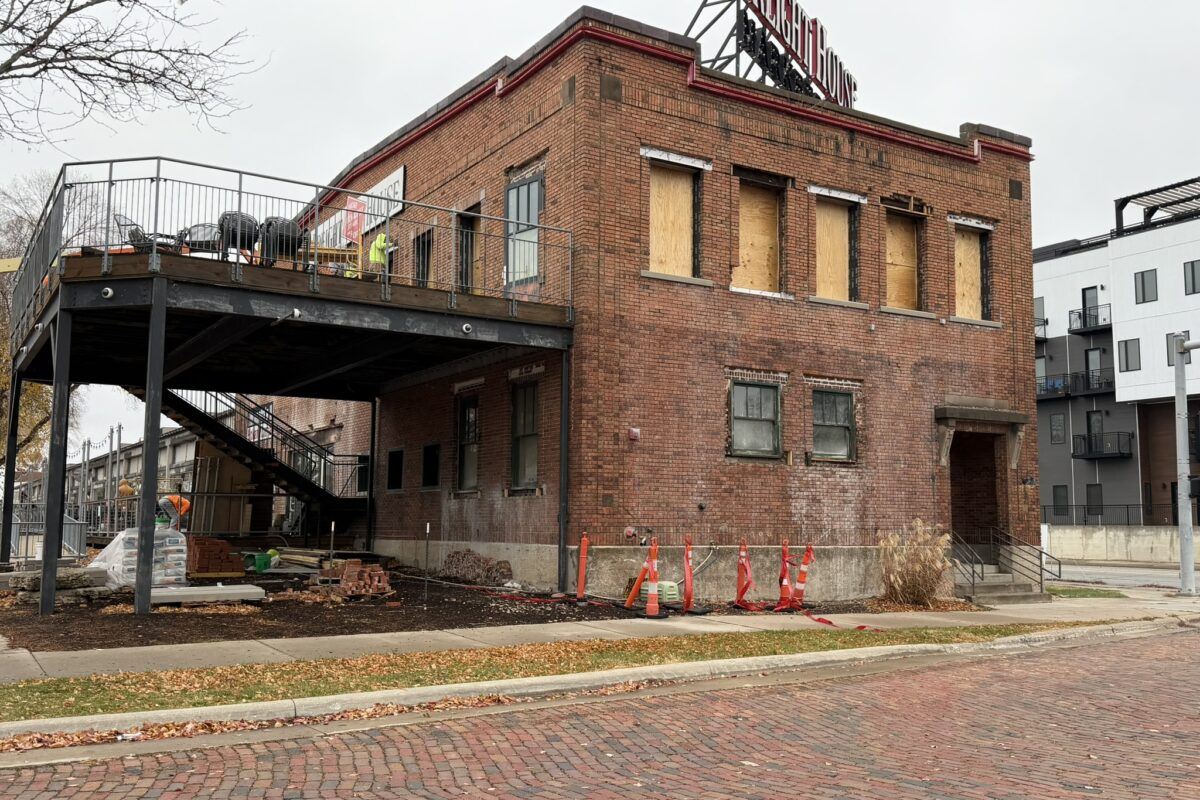 Freight House Historic Building Lintel Repair
Signs Your Commercial Building Needs Lintel Repair
Lintel failure rarely happens suddenly. Instead, deterioration progresses over years or decades, providing warning signs that building owners and facility managers should recognize. Early intervention can prevent costly structural repairs and potential safety hazards.
Visible Warning Signs
The most apparent indicators of lintel problems appear in the masonry directly above and around openings. Stair-step cracking in the mortar joints above windows or doors often indicates that the lintel has lost its ability to properly support the load above. Horizontal cracks running along the mortar joint at the lintel line suggest the lintel itself may be deflecting or corroding.
Rust stains bleeding through the masonry are a clear indication that a steel lintel is corroding. As steel rusts, it expands to several times its original volume, exerting tremendous pressure on the surrounding masonry. This expansion can crack and displace bricks, creating gaps that allow more moisture infiltration and accelerating the deterioration cycle.
Sagging or displaced brick courses above openings indicate advanced lintel failure. In some cases, individual bricks may become loose or fall out entirely. These conditions require immediate attention to prevent injury and further structural damage.
Less Obvious Indicators
Water infiltration around windows and doors may indicate lintel-related problems, particularly if the flashing system above the lintel has failed. Efflorescence, the white crystalline deposits that appear on masonry surfaces, can signal moisture moving through the wall assembly near compromised lintels.
Difficulty operating windows or doors can sometimes be traced to lintel deflection that has distorted the frame opening. If multiple openings on the same wall exhibit similar problems, a systematic lintel inspection is warranted.
Our Commercial Lintel Services
Bi-State Masonry provides complete lintel repair and installation services for commercial, institutional, and industrial buildings. Our crews have the equipment and expertise to address lintel problems at any scale, from single openings to comprehensive building-wide lintel replacement programs.
Lintel Repair and Restoration
When lintels are structurally sound but showing early signs of deterioration, repair and restoration can extend their service life significantly. For steel lintels with surface corrosion, we remove rust, treat the steel with corrosion inhibitors, and apply protective coatings. We then address any damaged masonry, replacing cracked or displaced units and repointing deteriorated mortar joints.
Lintel Replacement
Severely corroded or structurally compromised lintels require full replacement. This process involves temporarily shoring the masonry above the opening, carefully removing the failed lintel, installing a new lintel sized appropriately for the load and span, and rebuilding any damaged masonry. We install proper flashing systems to protect the new lintel from moisture infiltration.
New Lintel Installation
Building modifications sometimes require new openings to be cut into existing masonry walls. We install properly engineered lintels to support these new openings, coordinating with structural engineers when required to ensure adequate load-bearing capacity. This service supports renovation projects, building additions, and adaptive reuse of commercial structures.
Related Masonry Restoration
Lintel work often reveals or accompanies other masonry issues. Our comprehensive commercial masonry services allow us to address related problems during the same project, including brick replacement, mortar joint restoration, and waterproofing. This integrated approach is more efficient and cost-effective than addressing issues piecemeal.
Steel vs. Concrete Lintels in Commercial Construction
Commercial buildings in the Midwest typically utilize either steel angle lintels or concrete lintels, each with distinct advantages depending on the application.
Steel Angle Lintels
Steel lintels are the most common choice for commercial masonry construction. They offer high strength-to-weight ratios, can span considerable distances, and are relatively easy to install. Standard steel angle lintels consist of one or more L-shaped steel sections sized according to the opening width and load requirements.
The primary vulnerability of steel lintels is corrosion. In the Iowa and Illinois climate, with its freeze-thaw cycles, road salt exposure, and humid summers, unprotected steel lintels can deteriorate significantly within 20 to 40 years. Proper flashing, weep systems, and galvanized or painted coatings extend service life, but eventual maintenance or replacement should be anticipated.
Reinforced Concrete and Precast Lintels
Concrete lintels, either cast-in-place or precast, offer excellent durability and corrosion resistance. They are particularly appropriate for openings in concrete masonry unit walls and situations where steel corrosion is a significant concern. Precast lintels provide consistent quality and can speed installation on projects with multiple similar openings.
Concrete lintels are heavier than steel equivalents and may require different installation equipment and techniques. For very wide spans, reinforced concrete lintels can become impractically heavy, making steel the more practical choice.
Selecting the Right Replacement
When replacing failed lintels, we evaluate the original installation, current building codes, load requirements, and long-term durability to recommend the most appropriate replacement. In many cases, we can upgrade the lintel system with better flashing details and protective treatments to extend the replacement lintel's service life beyond the original.
Our Lintel Repair Process
Commercial lintel repair requires careful planning and execution to maintain building safety and minimize disruption to operations. Our systematic approach ensures quality results on every project.
Inspection and Assessment
We begin with a thorough inspection of the affected areas, documenting the extent of deterioration, identifying the underlying causes, and assessing the condition of surrounding masonry. For buildings with multiple openings, we may recommend a comprehensive survey to prioritize repairs and develop a phased restoration plan.
Engineering and Planning
Lintel replacement on commercial structures often requires structural engineering input to verify load paths and specify appropriate replacement lintels. We coordinate with engineers and architects as needed, obtaining required permits and ensuring compliance with current building codes.
Temporary Support and Shoring
Before removing a failed lintel, we install temporary shoring to support the masonry above the opening. This critical step prevents movement or collapse during the repair process. The shoring system remains in place until the new lintel is installed and the masonry has cured sufficiently to bear the load.
Lintel Removal and Installation
We carefully remove the deteriorated lintel and any damaged masonry units. The new lintel is set with proper bearing at each end and correct positioning relative to the wall face. We install appropriate flashing and weep systems to protect the new lintel from moisture.
Masonry Restoration
With the new lintel in place, we rebuild any removed masonry courses, matching existing brick or block as closely as possible. We complete all necessary tuckpointing and ensure the finished work blends with the surrounding wall surface.
Quality Assurance
We inspect the completed work to verify proper installation, adequate bearing, correct flashing details, and quality masonry workmanship. Documentation of the repair is provided for building maintenance records.
Frequently Asked Questions
What is a masonry lintel?
A masonry lintel is a horizontal structural member that spans the opening above windows, doors, and other apertures in masonry walls. Its purpose is to support the weight of the masonry above the opening and transfer that load to the wall sections on either side. Commercial buildings typically use steel angle lintels or reinforced concrete lintels, sized according to the span width and load requirements.
How do I know if my building's lintels need repair?
Common warning signs include cracking in the mortar joints above windows and doors, rust stains bleeding through the masonry surface, sagging or displaced brick courses above openings, and water infiltration around window and door frames. If you notice any of these conditions, we recommend scheduling an inspection to assess the extent of deterioration and determine appropriate repairs.
What causes steel lintels to fail?
Steel lintel failure is almost always caused by corrosion resulting from moisture infiltration. When the flashing system above a lintel fails or was improperly installed, water enters the wall cavity and contacts the steel. Over time, the steel rusts and expands, cracking the surrounding masonry and allowing more moisture to enter. The freeze-thaw cycles common in Iowa and Illinois accelerate this deterioration process.
How long does commercial lintel repair take?
The duration depends on the scope of work. A single lintel replacement typically requires two to three days, including setup, shoring, removal, installation, and masonry restoration. Buildings requiring multiple lintel replacements are often addressed in phases to minimize disruption. We provide detailed project timelines during the estimating process.
Do you offer free estimates for lintel repair?
Yes, Bi-State Masonry provides free estimates for all commercial lintel repair and replacement projects. We will inspect the affected areas, assess the scope of work required, and provide a detailed proposal outlining the recommended repairs and associated costs.
What areas do you serve for commercial lintel services?
We provide commercial masonry services throughout the Iowa and Illinois corridor, from Des Moines to the greater Chicago area. Our service territory includes the Quad Cities, Cedar Rapids, Iowa City, Peoria, Rockford, and communities throughout eastern Iowa and northern and central Illinois. For large commercial projects, we work throughout the broader Midwest region.
Request a Free Lintel Inspection
Deteriorating lintels compromise both the appearance and structural integrity of your commercial building. Bi-State Masonry, Inc. has more than 26 years of experience repairing and replacing lintels on commercial and institutional structures throughout Iowa and Illinois. Our skilled crews, commercial-grade equipment, and competitive pricing make us the right choice for your lintel repair project.
Contact us today at (309) 786-8800 to schedule a free inspection and estimate. We will assess your building's lintel conditions and provide straightforward recommendations to protect your investment.