
8 Signs Your Chimney Needs Restoration
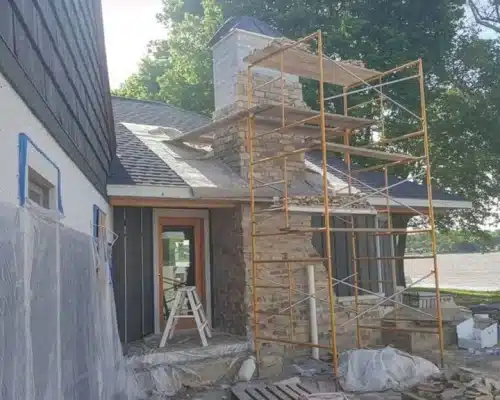
A masonry chimney takes more abuse than almost any other part of your home. It’s exposed on all sides, sits above the roofline where wind and weather hit hardest, and goes through more freeze-thaw cycles than your foundation or exterior walls. Small problems that start at the top of the chimney rarely stay small. Here’s what to look for, and why catching these signs early can save you from a full rebuild later.
A Pearl Button Factory Reborn: Our Masonry Work on Muscatine’s McKee Building Restoration
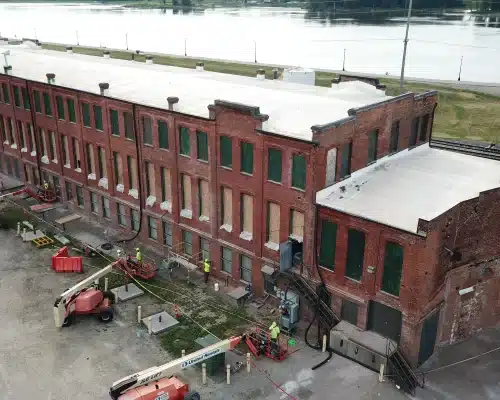
How Bi-State Masonry helped bring a 1907 landmark back to life on an award-winning historic restoration in Muscatine, Iowa.
Proud to Be Part of Iowa’s Top Restoration Project
When the design-build team on the McKee Building restoration was named the recipient of the Master Builders of Iowa Award of Excellence—the event’s highest project honor—it recognized what happens when an owner, a general contractor, a design team, and skilled trades all pull in the same direction. Bi-State Masonry was proud to be the masonry trade partner on that project, restoring the century-old brick of one of Muscatine’s most recognizable landmarks. The former McKee Button Factory, built in 1907 on the banks of the Mississippi, could easily have been torn down. Instead, it was saved—and much of what visitors see today is the same brick that has stood for more than a hundred years, brought back to life joint by joint.
Award-Winning Masonry Restoration: University of Iowa Chemistry Building
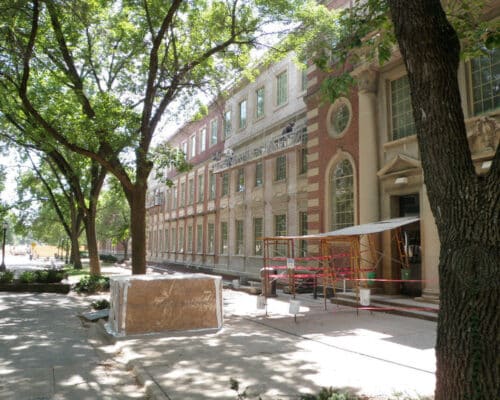
In 2011, Bi-State Masonry received 2nd Place in the Large Projects category at the MCAA TEAM Awards for our historic masonry restoration work on the University of Iowa Chemistry Building. For context, the MCAA TEAM Awards are the masonry industry’s top recognition program—getting called up on stage in Las Vegas to accept that award was a proud moment for our entire crew.
The Project
The University of Iowa Chemistry Building is a five-story historic structure built in the 1920s, sitting on a hillside overlooking the Iowa River. After nearly 90 years of Iowa weather—brutal freeze-thaw cycles, temperature extremes, and moisture—the building was showing serious problems. Deteriorating mortar joints, failed waterproofing, expansion cracks in the brick, and damaged limestone all threatened both the building’s structural integrity and its historic character.